Pink Noise – Helpful or Harmful for Sleep?
The latest trend? Pink noise for better sleep.
Maybe you’ve heard of white noise. White noise is a type of sound that contains all frequencies that humans can hear, played at equal intensity. Think of it as a consistent “shhhh” sound that blocks out other noises. The name comes from white light, which contains all colors of the visible spectrum combined. Similarly, white noise contains all audible sound frequencies mixed together. It can be used to help people sleep, improve focus, and help make the ringing sound associated with some inner ear disorders less noticeable.
Pink noise is a type of sound that contains all audible frequencies, but with more energy in the lower frequencies compared to white noise. This gives it a deeper, softer quality. Videos on social media claimed that it’s better than white noise for sleep.
Millions use broadband noise (white, pink, and brown noise) for sleep. White noise and ambient podcasts account for 3 million daily hours on Spotify, and the top five broadband noise videos on YouTube have over 700 million views combined.
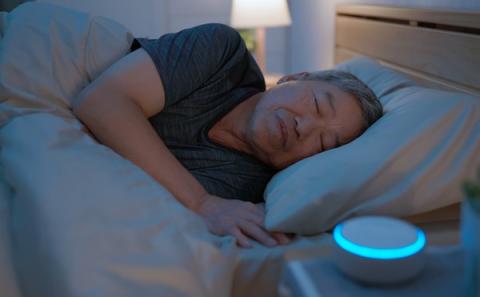
But a new study from the University of Pennsylvania challenges the popular practice of using pink noise to improve sleep. Researchers discovered that pink noise reduced REM sleep by an average of 19 minutes per night.
“REM sleep is important for memory consolidation, emotional regulation and brain development, so our findings suggest that playing pink noise and other types of broadband noise during sleep could be harmful,” said study author Mathias Basner, MD, PhD, professor of Sleep and Chronobiology in Psychiatry.
Interestingly, the study found that earplugs were much more effective than pink noise at protecting sleep quality against environmental noise. While further research is needed, it’s a good reminder that not everything that trends is fact-based. If a health trend sounds too good to be true, it probably is. Before trying any health trend, ask yourself:
- Is there solid scientific evidence supporting this?
- What would my doctor say?
- Could this actually harm me?
- Am I being sold something expensive with miracle claims?
When in doubt, talk to your health care provider before jumping on the latest health bandwagon. Some trends are just ineffective and a waste of money, but others can genuinely put your health at risk.